
Special Issue: Water Narratives
24 December 2025
Published online 24 December 2025
In the Arab world, water shapes narratives about scarcity, abundance, and power. Some of these narratives are misconceptions.
We have asked six Arab water experts what most people get wrong about water, and what can be done to secure its future.
.jpg)
Credit: John Wreford/ Shutterstock.com
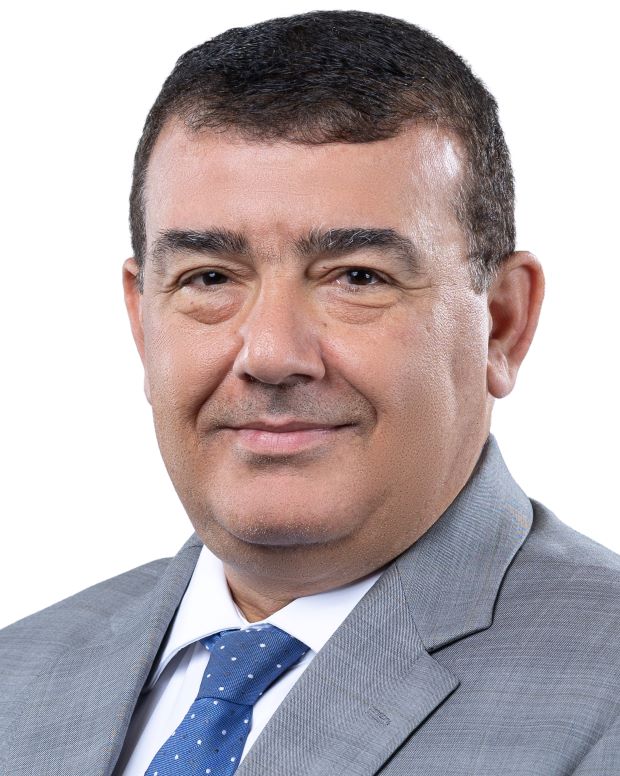
Mohamed Dawoud, Senior Water Resources Advisor, Environment Agency – Abu Dhabi (EAD)
“The biggest misconception is that water is only a matter of ‘scarcity’, and it is ‘free.’”
Water scarcity is framed as the main challenge in the Arab region in most published reports and policy papers. The Arab region gets less than 1% of global renewable freshwater resources while having more than 5% of the world’s population. The annual per capita renewable freshwater availability in most Arab countries has fallen far below the water poverty line of 1,000 cubic metres per year.
Most countries are investing in costly non-conventional resources such as desalination and wastewater reuse, which have environmental impacts. Yet the real challenge is mismanagement. Water strategies remain supply-driven with little focus on demand management. Irrigation relies on outdated systems that waste more than they deliver.
Focusing solely on scarcity drives expensive supply-side projects while ignoring smarter demand management, recycling, and conservation. The current narrative of scarcity feeds helplessness: “We don’t have enough,” instead of responsibility, “We must use what we have better.” Scarcity is real, but it is only the background. The most crucial issue is how the region chooses to manage, value, and innovate around water.
For Dawoud, the way forward is to rethink how existing water is used, instead of chasing more supply.
“If there is one innovation that can change the narrative, it would be the investment in water demand Research and Development (R&D).”
This investment can transform the way water is managed in agriculture and food production. These solutions can reduce groundwater deterioration and dependence on costly desalination while maintaining or even improving agricultural production.
Ultimately, strategic investment in demand-side R&D improves small farm’s income, secures food, and supports sustainable development by ensuring that limited water resources generate maximum economic and social returns.
Scarcity alone doesn’t tell the full story. Even a river that never stops flowing can hide a nation’s vulnerability.
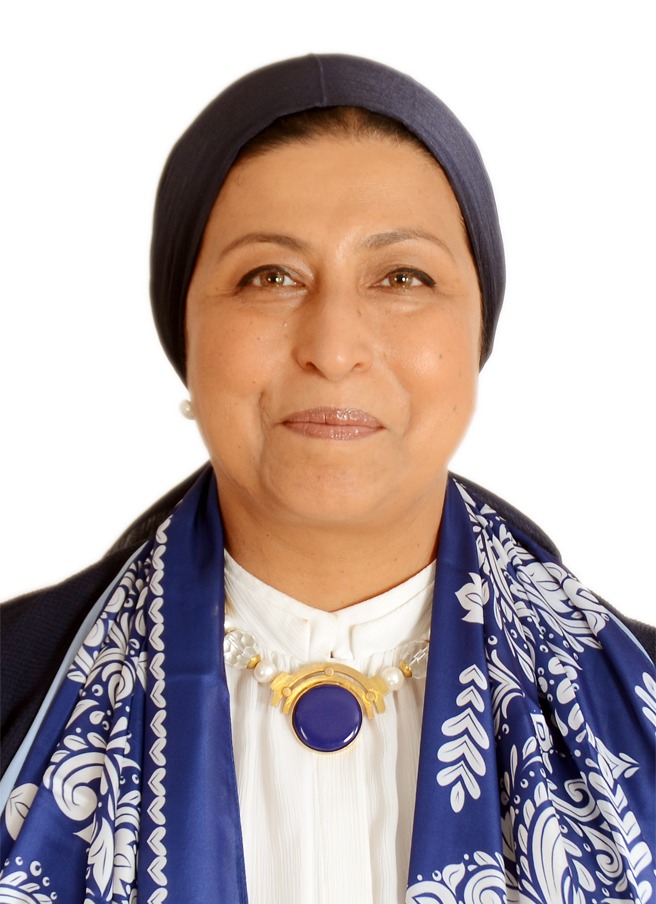
Tahani Moustafa Sileet, Project Director, VICMED, "Establishment of a Navigational Line between Lake Victoria and the Mediterranean Sea
“Watching a river flow can create the illusion that water is abundant and will always be available, but that’s often far from the truth.”
Though the Nile flows through Egypt, it relies on external sources for 97% of its water. This makes it highly vulnerable, as climate change, uncoordinated infrastructure, pollution, and overuse are rapidly depleting water supplies, leading to droughts, crop failures, and sometimes conflict.
Recognizing water as a human right and a finite, precious resource is essential for global sustainability and development.
So, when natural sources fall short, can technology offer dependable alternatives?
“Desalination using renewable energy like solar or wind can be a game-changer in dry and coastal regions.”
It can improve access to water, ease the pressure on freshwater ecosystems, and support more stable agriculture, especially in water-scarce areas. Integrating desalination with climate-smart irrigation, efficient distribution, and water reuse systems would create circular water economies despite the challenges of membrane cost, brine disposal, and infrastructure demands. Yet with climate change deepening global water shortages, desalination has the potential to change how societies value and manage water.
Even when water flows in abundance, its availability depends on governance, distribution, and management.

Nidal Hilal – Director of NYU Abu Dhabi Water Research Center
“One of the most common misconceptions about water scarcity is that it comes from a simple lack of supply."
We live on a planet abundant with water; however, a small fraction of it is fresh, accessible, and safe for human use. Even that small fraction isn’t spread fairly, gets polluted, and is under pressure from farming, factories, and households.
Relying only on technology to fix the issue is another common misconception, as innovation doesn’t succeed in a silo. Without strong governance, transformative policies, and inclusive management, even the best solutions risk failing.
Water scarcity is not only a technical challenge but also a social, economic, and political one. Recognizing this complexity transforms the illusion of endless water into a pressing call for smarter and more sustainable usage.
Water challenges are too complex for a one-size-fits-all solution. Therefore, real progress comes when various innovations, such as improved membrane technologies, more efficient energy use, and AI tools, are combined to change how we manage water.
What excites me most is how these innovations work together; an AI tool predicting membrane fouling can increase desalination plant efficiency, integrating renewable energy can reduce emissions, and combining both with surface-patterned membranes can further cut energy consumption. These interlinked solutions create systems that are smarter, cleaner, and more resilient.
Water challenges go beyond supply and policy; they are about how societies grow, consume, and manage water.

Maha Al-Zu'bi, Regional Researcher - Sustainable and Resilient Water Systems - International Water Management Institute
“Many people assume water scarcity in MENA is purely a natural outcome of living in the driest region in the world. In reality, scarcity here is as much about people as it is about nature.”
Scarcity is closely linked to rapid population growth and economic development, which means more people and higher water use per person. Mismanagement, over-extraction, pollution, and unequal access affect who gets water, when, and by how much.
The United Nations Intergovernmental Panel on Climate Change IPCC Sixth Assessment Report shows that climate change intensifies these pressures by accelerating the water cycle, which makes droughts more frequent, rainfall less predictable, and extreme events more damaging.
In a region facing political and social fragility, these stresses increase risks to communities, health, and stability.
Al-Zu'bi believes that the future depends on solutions rooted in nature itself.
“For MENA, where every drop matters, scaling nature-based water solutions is not just an innovation. It is essential for a sustainable future.”
In a region as fragile as MENA, where water scarcity shapes many parts of life, no single technology or practice can solve the crisis. The real solution is to think of water as the starting point for community resilience.
Nature-based solutions, including restoring wetlands to regulate water flows, harvesting rain to secure local supplies, and greening urban areas to improve recharge, can bring communities together while strengthening water systems.
These solutions are not meant to replace existing infrastructure, but to work alongside it, cooperating with treatment plants, irrigation systems, and storage facilities to enhance performance and sustainability. They are most effective when linked across different areas, connecting water with food, energy, and ecosystems. By focusing on water in integrated approaches, we can move beyond quick fixes and toward lasting resilience.
When solutions are discussed, one technology dominates the headlines: desalination.

Youssef Brouziyne - Regional Director (MENA) & Principal Researcher - International Water Management Institute (IWMI) - CGIAR
“One common misconception is that desalination is a standalone fix for water scarcity, especially in the Middle East and North Africa.”
While desalination is indeed a strategic solution, it isn't a magic bullet. Desalination comes with trade-offs: energy demand, carbon and brine footprints, coastal impacts, cost and equity questions, and governance complexity.
People often underestimate the significant investment capital required to build and maintain desalination plants, as well as the importance of looking at the entire water value chain.
Desalination should fit into a broader framework that includes understanding agricultural and ecosystem water use, carbon footprints, and efficiency improvements. In other words, it should be part of a holistic approach that includes better water management, wastewater reuse, and efficiency gains in agriculture.
So, the real question is not if we should desalinate, but how to make use of every drop produced across the whole value chain.
“An innovation that could transform water management is the concept of value-chain-based desalination hubs.”
By focusing on how desalination fits into the entire water, agricultural, and environmental value chain, we can create programmes to efficiently store, transport, and use water.
These hubs would not focus only on technology but also on the necessary economic enablers, institutional frameworks, and social equity conditions. That means improving desalination technology itself, and the way we manage distribution, storage, agricultural productivity, and water-use efficiency.
Crucially, the hubs should be planned scientifically, starting from basic needs and efficiency gains, not from megaproject ambition alone. In MENA and other dry areas, this combined model can change desalination from a backup source to a reliable way to thrive.
The misconceptions shift from scarcity to abundance, but both extremes are illusions.
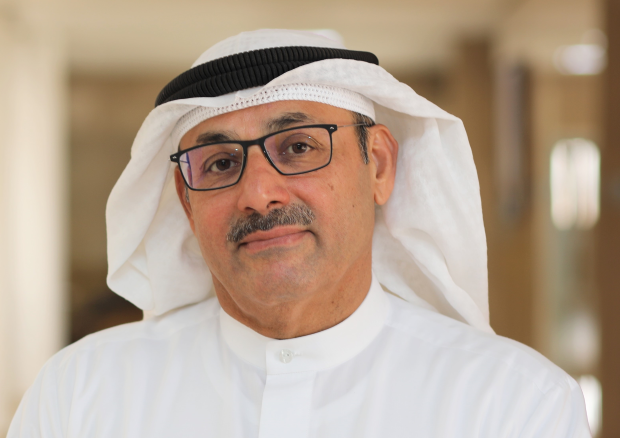
Waleed Khalil Zubari - Professor of Water Resources Management - Center of Environmental and Biological Studies - Arabian Gulf University
“The GCC countries have built massive, world-leading desalination infrastructures that make water flow continuously from taps 24/7 with almost 100% population access to high-quality, safe drinking water. Heavily subsidized, it creates a misconception for residents and tourists that water is cheap and always available on demand.”
This visible reality hides significant costs. The huge subsidies and the opportunity cost of fossil fuels represent billions of dollars that could go toward healthcare, education, or economic diversification. Also, energy-heavy desalination has a large carbon footprint, making it harder to reach carbon-neutral goals, and the brine discharge causes significant harm to marine ecosystems.
By creating the perception that water is a low-value commodity, this illusion directly kills any incentive for conservation and encourages a wasteful lifestyle, fundamentally undermining the path to true water sustainability.
As Zubari explains, desalination creates the illusion that water is endless. Could new technology change this and push us toward real sustainability?
“AI and emerging technologies integration could move the GCC countries from a reactive, wasteful model to a predictive, precise, and efficient one, fundamentally changing how water is managed and conserved in the region.”
AI and emerging technologies integration can act as the brain that synchronizes the entire water cycle. AI-powered smart water grids use a network of sensors and meters to collect real-time data on flow, pressure, and quality. When equipped with machine learning analysis, these systems can pinpoint exact leak locations, predict which parts of the aging infrastructure are most likely to fail, and dynamically balance pressure to reduce stress on pipes and minimize losses.
At the demand sites, smart sensors can give consumers insights into their water use and alert them if leaks are found. Within the desalination process, AI algorithms can adjust operations based on salinity and energy costs. In agriculture, AI and smart sensors allow hyper-precise irrigation. Instead of scheduled watering, smart systems can hydrate crops based solely on real-time soil moisture and weather data, eliminating profound wastage.
Misconceptions may cloud the picture, but they are not the whole story. The brighter side lies in how the region rethinks water and designs innovative solutions.
doi:10.1038/nmiddleeast.2025.222
24 December 2025
24 December 2025
24 December 2025
Sign-up to receive our e-alert update every two weeks to keep up with everything new on the portal.
Sign up for e-alerts
Stay connected: