
Mining minerals from desalination brine in Saudi Arabia
21 December 2025
Published online 21 December 2025
While most comments on the inauguration of the Grand Ethiopian Renaissance Dam have focused on its technical and geopolitical implications, we argue that to reach an agreement, the three riparian countries should also consider the symbolic and emotional dimensions of the river.
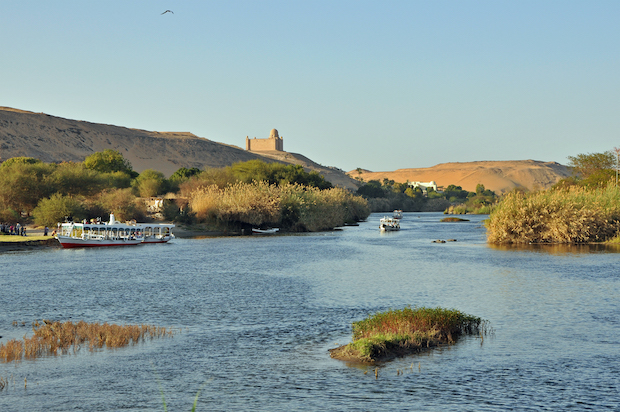
Marc Ryckaert/ CC BY-SA 4.0
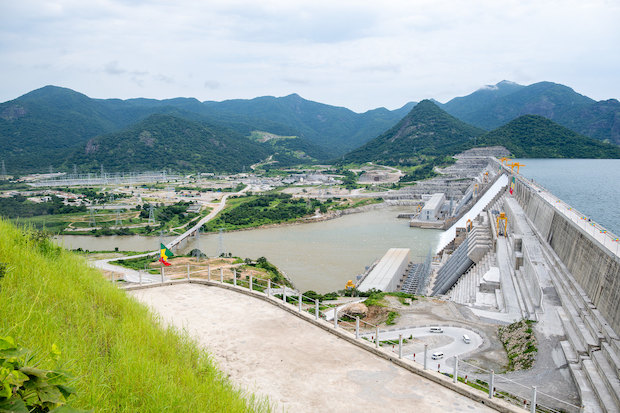
In September 2025, Ethiopia inaugurated Africa’s largest hydroelectric dam, the Grand Ethiopian Renaissance Dam (GERD) on the Blue Nile.
Since its inception, the construction of the GERD has been a source of contention with downstream countries, Sudan and Egypt. In addition to technical and legal considerations, any prospective agreement must account for the river’s symbolic and affective dimensions.
As the first major dam constructed by Ethiopia on the Nile, the GERD challenges a century-long regime of water allocation and management rooted in the 1929 and 1959 treaties, which were concluded exclusively between Egypt and Sudan. These agreements codify what Egypt and Sudan describe as their “historical rights” to Nile waters, whereas Ethiopia characterizes them as a “colonial regime.”
The three countries have been engaged in several rounds of negotiations – involving external mediators or facilitators like the African Union, the US government, or the World Bank — with a few achievements, such as the signature in 2015 of a tripartite Declaration of Principles, and several deadlocks.
The GERD inauguration in 2025 occurred without agreement between the three governments on the filling and operation of the dam, as well as on the mechanisms to be implemented to address and resolve future disputes over the dam.
Egypt, heavily dependent on the Nile waters for agriculture and drinking water, is concerned about the river’s flow and asks for a binding treaty to oversee the management of the dam.
Upstream, Ethiopia considers the dam as a strategic project to boost its economic development and ensure electricity in a country where only half of the population has access to it. The Ethiopian government prefers an ad hoc mechanism for conflict management.
In the middle lies Sudan, which might benefit from the GERD in terms of improved flood control, but also sees risks in terms of the safety of its own dams and reservoirs. Therefore, the Sudanese government emphasizes the need for data sharing and coordinated operations between the GERD and downstream dams.
For all these reasons, the Easter Nile basin has been described as one of the hotspots for ongoing water conflicts, also at risk of future escalations toward a water war.
Most analyses and comments have focused on the technical and legal aspects related to the dam. From colleagues who have been involved in the negotiations, we learned that an agreement on the technical aspects (how to fill the dam and how to operate it during drought) had been almost achieved by technical negotiators, but in the end was rejected by the political leadership. This is because the Nile and the GERD are loaded with political, symbolic, and identitarian meanings on which national leaders can hardly compromise.
To find a sustainable agreement and modus operandi, the three riparian countries should acknowledge the symbolic and emotional dimension of the river, and work with the emotions and representations that can create a common ground across countries, cultures, and water uses.
Our research: media and emotions in water diplomacy
With an international and transdisciplinary team comprising researchers, photojournalists, artists, communicators, and museum curators from Ethiopia, Egypt, Sudan, Italy, and the Netherlands, we have been studying the role of media, science communication, and representations of the river, and how these influence understandings about contemporary water issues or shape diplomatic negotiations.
Our findings: representations matter and shape emotions
We have learned that the Nile holds a deep symbolic meaning for all the riparian countries in terms of national identities, religion, history, popular and material culture. This contributes to collective emotions about the river and its infrastructures.
These cultural aspects are linked to the river ecology and physical properties. For instance, since the Nile contributes to soil erosion and flushes away Ethiopia’s land, contributing instead to the fertility of downstream countries, it has been depicted as a traitor in Ethiopian popular songs and poems. The construction of the GERD has changed this narrative, and now the river is celebrated as a son coming back home and taking part in the development of the country.
Narratives and representation are not neutral; they are shaped by power relations. In the case of the Nile, they are often caught in what we call the ‘nation trap’: the three riparian countries are represented as unitarian and homogeneous actors who speak with one voice and have one “national interest”. The voice is often that of the government, and it gets hardly challenged in national debates. Often, the controversy is depicted as a mere bilateral issue between Ethiopia and Egypt, overlooking the fact that Sudan lies in the middle. Including Sudan in the picture allows for a more comprehensive account of the issue, discussing both the benefits and risks of the dam.
Media representations influence collective emotions. For instance, the GERD generates anger and pride among the Ethiopian public opinion, and fear in the Egyptian ones. These emotions contribute to shaping narratives, such as the exaggeration of the dam’s benefits in Ethiopia or its risks and impact in Egypt.
However, emotions remain a neglected issue in water diplomacy, both among practitioners, diplomats, and researchers. Besides the collective emotions elicited by the river and its infrastructure, we should also consider the emotions of the diplomats involved in the negotiations and those of the scientists studying these dams.
When it comes to popular culture and narratives, scholars are not mere external observers. We are also consumers and sometimes (co)producers of such narratives. This position, together with the emotions that it brings, should be explicitly acknowledged and critically reflected upon to inform researchers’ contributions to water diplomacy.
As scientists, researchers, and science communicators, we can contribute to dialogue over shared waters. Our experience shows the potential for trans-disciplinary collaborations and co-production of knowledge across the media and academia. For instance, through the #EverydayNile photo-journalism project, we learned that photos can be an effective tool to promote empathy and dialogic conversations over shared waters, across countries, disciplines, professions, and water users.
Our research indicates that when negotiating over the GERD and the Nile River, the three countries are not merely discussing water flows or the operation of a dam; rather, they engage with political identities, nation-building projects, popular imaginaries, and collective emotions associated with the river.
This conclusion suggests the need to better incorporate emotions in water diplomacy theory and practice, for instance, by designing tools to conduct an emotional impact assessment of large dams, as is already done for the environmental and social impact.
As journalists, researchers, and practitioners, we should become more aware of how our representations of the river contribute to these emotions and shape negotiations over shared waters.
doi:10.1038/nmiddleeast.2025.215
21 December 2025
21 December 2025
11 December 2025
Sign-up to receive our e-alert update every two weeks to keep up with everything new on the portal.
Sign up for e-alerts
Stay connected: